
🔥Paky Official🔥
@paky__official
#1
#teampaky ♥️ ✏️INSTA: paky__official 📥 in elenco AGCOM More⬇️
- Follower
- 29.6M
- Like
- 607.1M
- Visual.
- 14.7M
- Engag.
- 0.4%
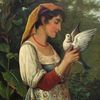
@espelia
Culture, folklore and native religion of the Italian Peninsula pinterest: italicorum
ꀾ˚✧𐌖𐌉𐌕𐌄𐌋𐌉𐌖ꀾ˚✧ è un creator di TikTok in Italia con 4.1K follower e 249.2K like. I suoi video fanno in media 20.4K visualizzazioni, con un tasso di engagement del 29.7%. Hashtag più usati: #fyp, #italy e #italianculture.
https://sign.myvoice-mychoice.org/forms/european_commission_petition_eng?utm_source=sosha&utm_medium=tiktok&utm_name=5cdca4cd-81eb-45d0-a783-dc6934dcaa62&utm_content=16d229da-390c-45af-a353-62dee7b3ede5&source=sosha&shalid=1d7c0bc4-3b03-973d-a0da-845ec6d9d660&shltok=YKyxQb8YUltimo aggiornamento:
Ultimo video: 2026-03-08

Traditional Italian clothing from the town of Antrona Schieranco (Piedmont region, northern Italy) #fyp #italy #italianculture #traditionalclothing #northernitaly

Traditional Italian jewelry and costumes of the Italian ethnic community of Dignano (Vodnjan), in Istria, now part of Croatia. This Romance-speaking population, rooted in the territory for centuries, has preserved a significant material heritage, blending Venetian, rural Istrian, and Adriatic traditions. Part of these artifacts, including jewelry and traditional female costumes, is kept in the Sacred Art Collection of the Church of San Biagio. In Dignano, both the festive or bridal costume and the everyday costume have survived. The festive outfit, used for centuries, has reached us almost unchanged, representing a precious testimony of cultural originality. Archival documents, period paintings, and chronicles confirm the presence of these garments already four centuries ago. The so-called novissaio, the bridal or ceremonial outfit, was made with domestic fabrics such as linen, hemp, and dyed wool (gorgani), while luxurious fabrics like brocade, damask, satin, veils, and silk ribbons came from Venetian workshops. Although the garments were similar for all women, each outfit was personalized through embroidery, lace, colors, and accessories. The festive female costume consisted of many layered elements, worn progressively: bustein (bustier, white), braghise (white underwear), camèisa (shirt, white), camisulèin (red bodice), carpìta (underskirt, green, red, or white), brazaròla (decorated corselet), soca (black skirt), maneghe (decorated sleeves), traversa (black apron), sintoura (decorated belt), velo (delicate white shawl), tovajol (shoulder/side scarf, white), fasulito (handkerchief, white), calse (white stockings), and scarpite (black shoes). Almost all these items are mentioned in 17th-century notarial documents. Some pieces are now lost, such as the peliza and the sintouìra with silver fittings. Even within a uniform model, differences in embroidery quality, fabric richness, and accessories allowed each woman to distinguish her outfit. The costume was completed with a traditional hairstyle of ancient Latin derivation, passed down through generations by one or two specialized hairdressers, adorned with hairpins (crinali), decorative spikes (tremoli), pins (spille), pendants (piroli), and long necklaces. The overall effect elevated the wearer into a poised, elegant figure, admired for the harmony of colors, the richness of accessories, and the dignity of posture. The male festive costume, in coordinated colors of black, red, and white, created a unified, artistic polychromy when paired with the female outfit. Jewelry, often part of the bridal trousseau, mirrored this richness. Among the most characteristic items were decorative hairpins (tremoli), rare fan-shaped crinali, earrings (riceini-piroli) with pear-shaped pendants, devotional medallions, gold bead necklaces (peruseini), and rings with rosette or navette shapes. The 19th-century manuscript Status animarum lists eight local goldsmiths, confirming a lively local production that complemented Venetian and Viennese workshops, mainly devoted to sacred objects. #fyp #italy #venetian #traditionalclothing #culturetok

Note: this list includes only autonomous linguistic systems recognized by linguists and institutions. many regions/areas are not listed because they speak regional dialects, derived from broader linguistic families (like Tuscan or Southern Romance) and so are not considered separate languages! #fyp #italy #traditionalclothing #languages #romance
Al 2026-10-15, ꀾ˚✧𐌖𐌉𐌕𐌄𐌋𐌉𐌖ꀾ˚✧ (@espelia) ha 4.1K follower su TikTok.
#teampaky ♥️ ✏️INSTA: paky__official 📥 in elenco AGCOM More⬇️
Cuban Creator Dance • Fashion • Lifestyle Creating moments
أحبكم في الله ❤️ رابط متجر دخوني
YEAH! Email:
Movie Promoter 🤗
Collab👇 📩 Instagram +1,9M My YouTube +1,6M Facebook:+3,3M
Canto, respiro e (non) mi godo la vita Bisnesss: In elenco AGCOM


